Export fines
For buyers seeking a fine-cut rooibos. The sieve distribution, leaf and stem content, moisture and infusion requirements are agreed against a sample.
Rooibos · from the farm
Grown on these lands, hand-cut, fermented and dried on the farm's tea court, and supplied to trade buyers in four grades. Tiquimani handles export enquiries with us.
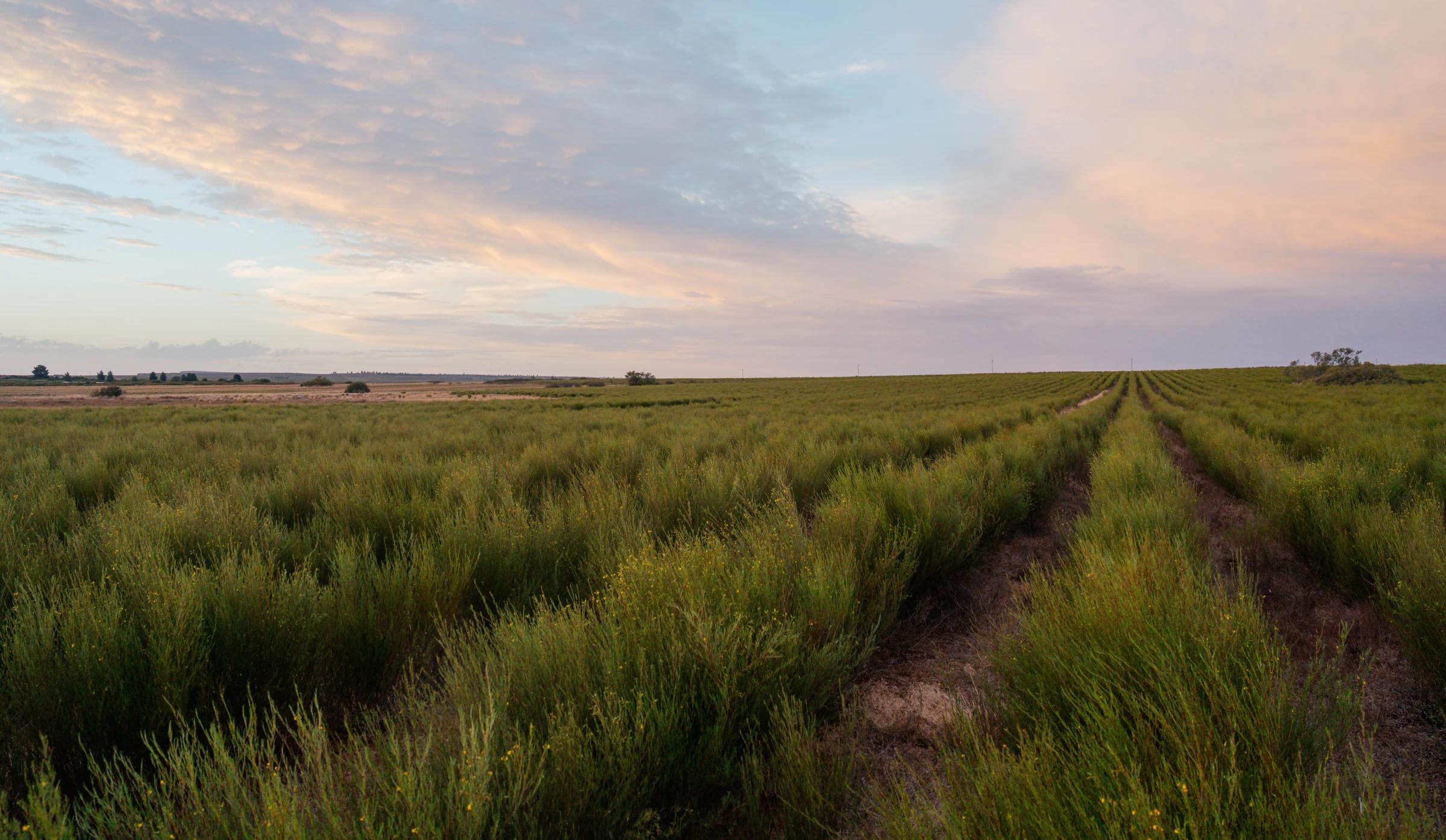
From the green bush to the red tea. The harvest comes to the farm’s tea court, where cutting, oxidation and sunshine bring out the rooibos we know.

When the bushes are ready, the leafy shoots are cut by hand. The harvested branches are gathered into bundles for the tea court, leaving the plant to grow again.
The green rows before harvest.
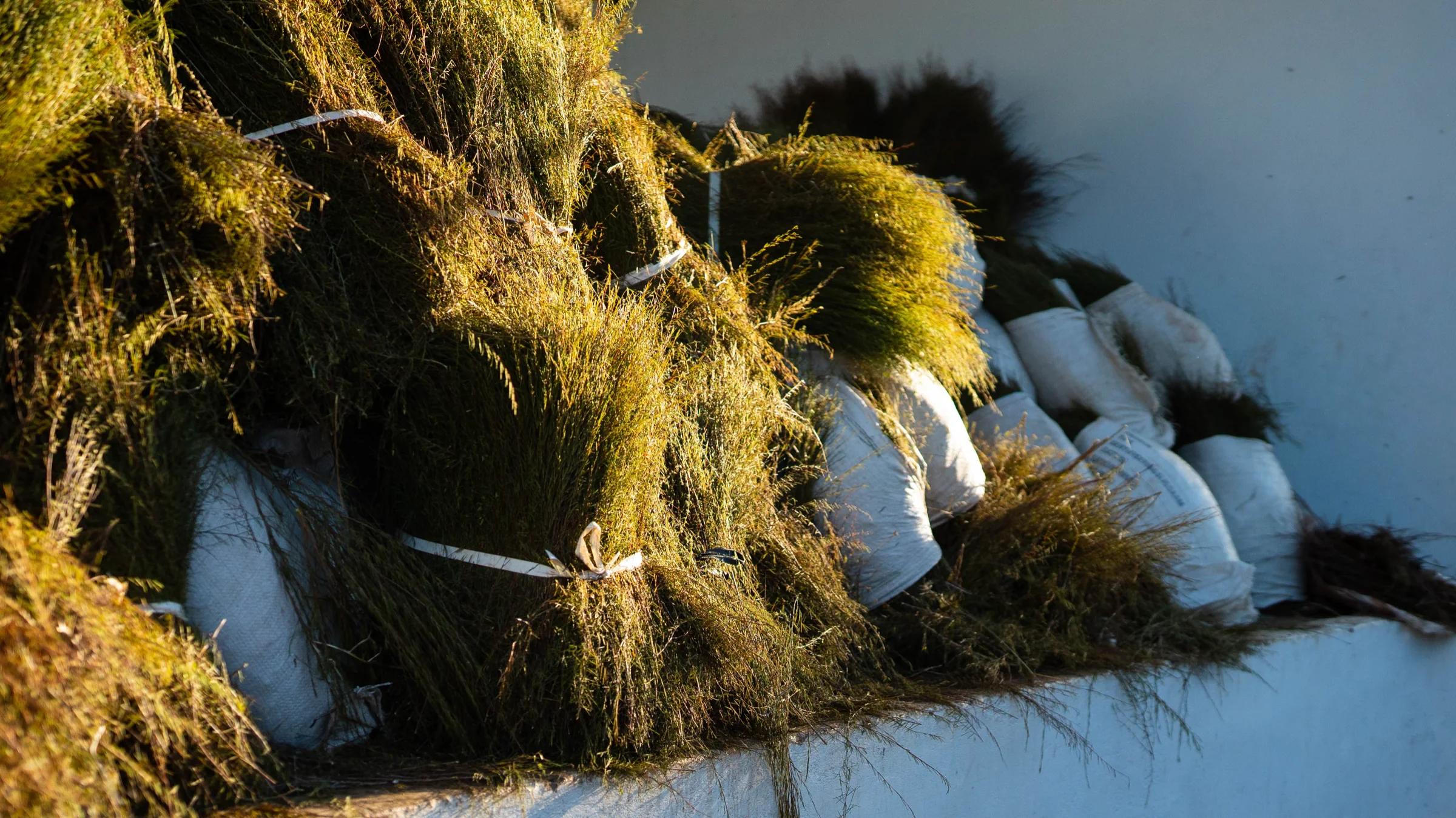
The bundles arrive green and fragrant. Leaves and fine stems are chopped into smaller pieces, preparing the fresh material for the next stage on the court.
Fresh bundles waiting to be chopped.
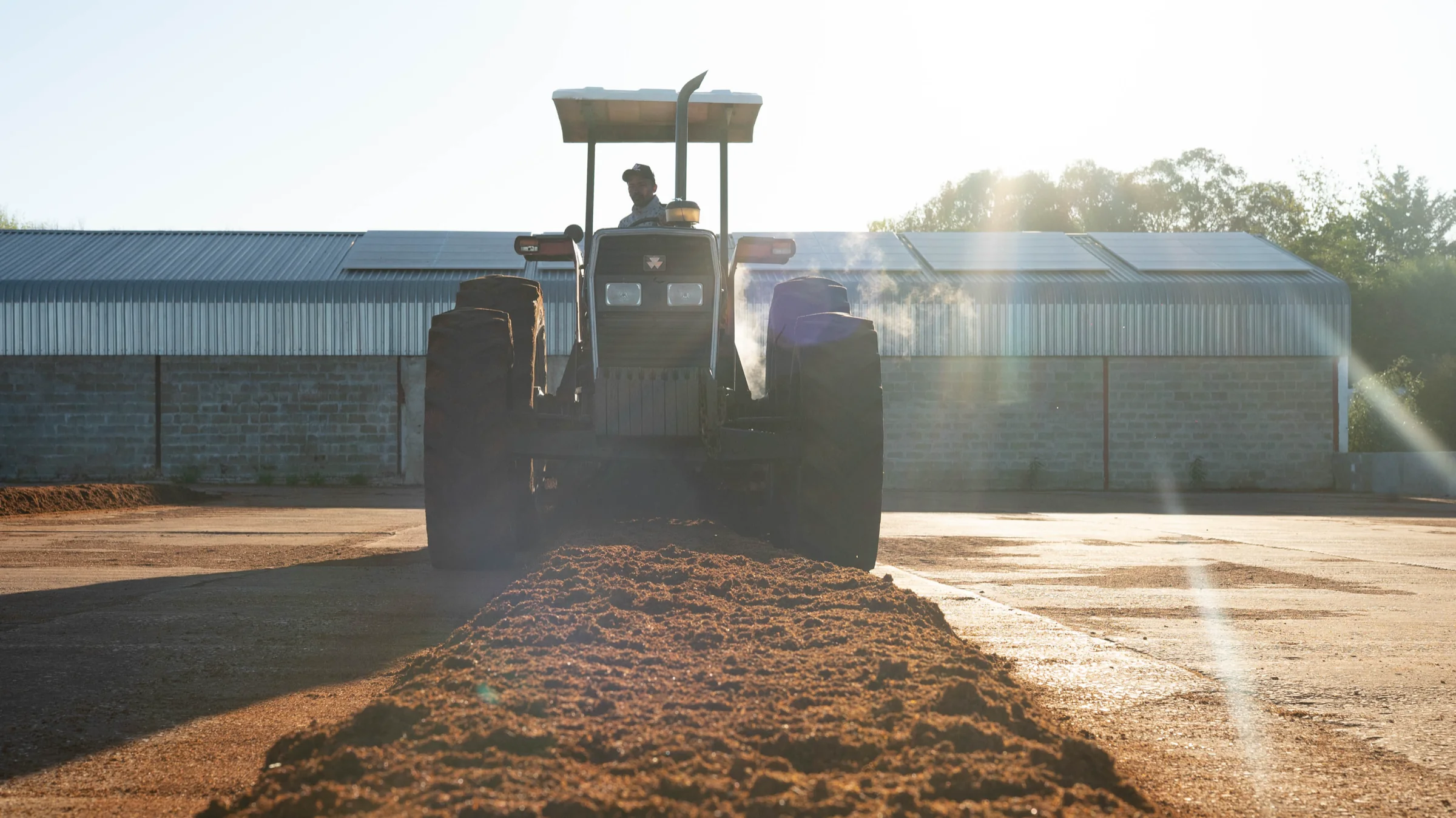
The cut rooibos is moistened and bruised, then left in heaps overnight. Enzymatic oxidation, traditionally called fermentation, develops its red-brown colour. The tea is then turned on the court.
Turning the rooibos after the overnight sweat.
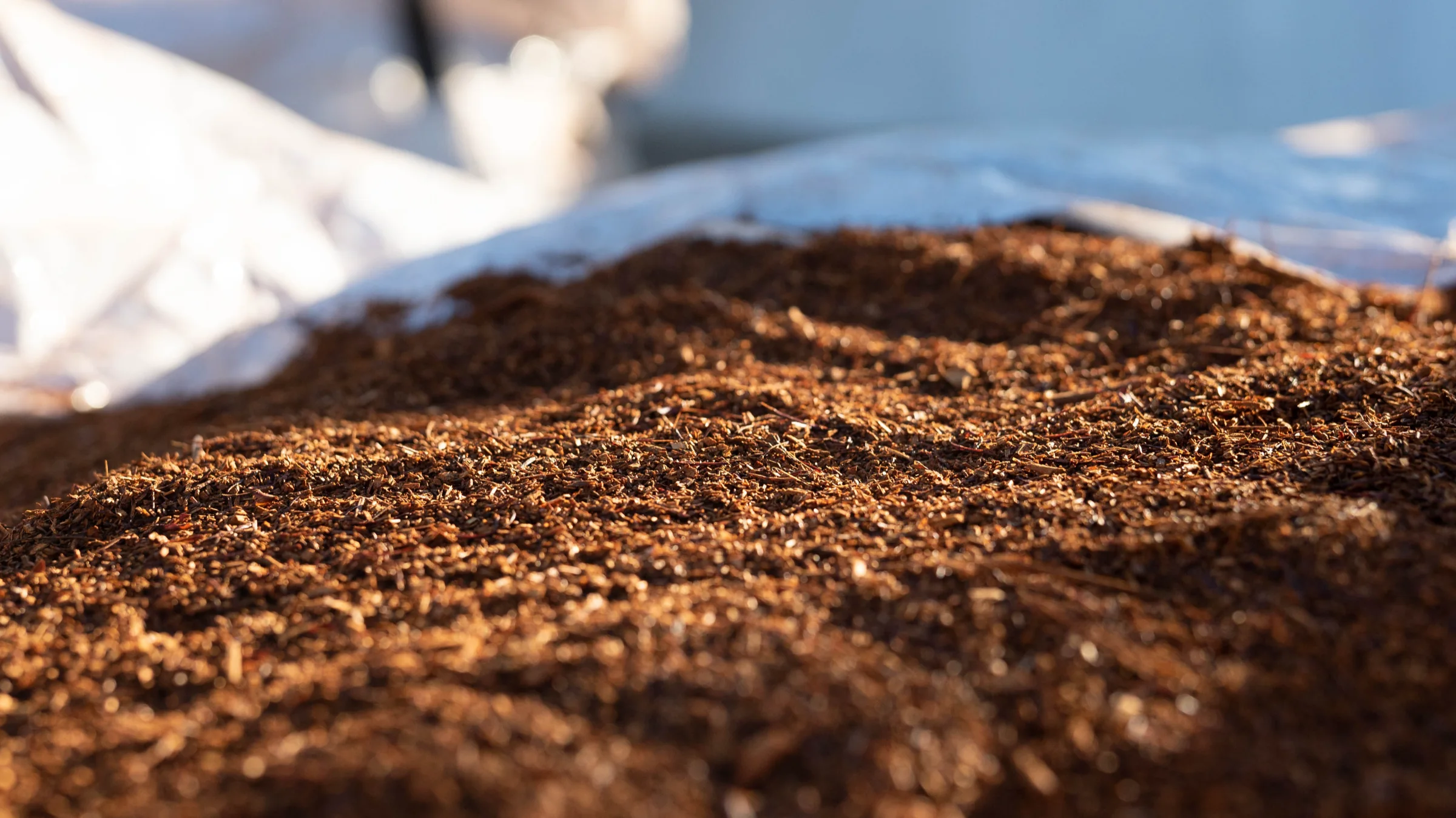
The rooibos is spread out on the tea court to dry in the sun. The dried tea is collected, ready for the grading, testing and packing arrangements agreed for its destination.
Dried rooibos from the tea court.
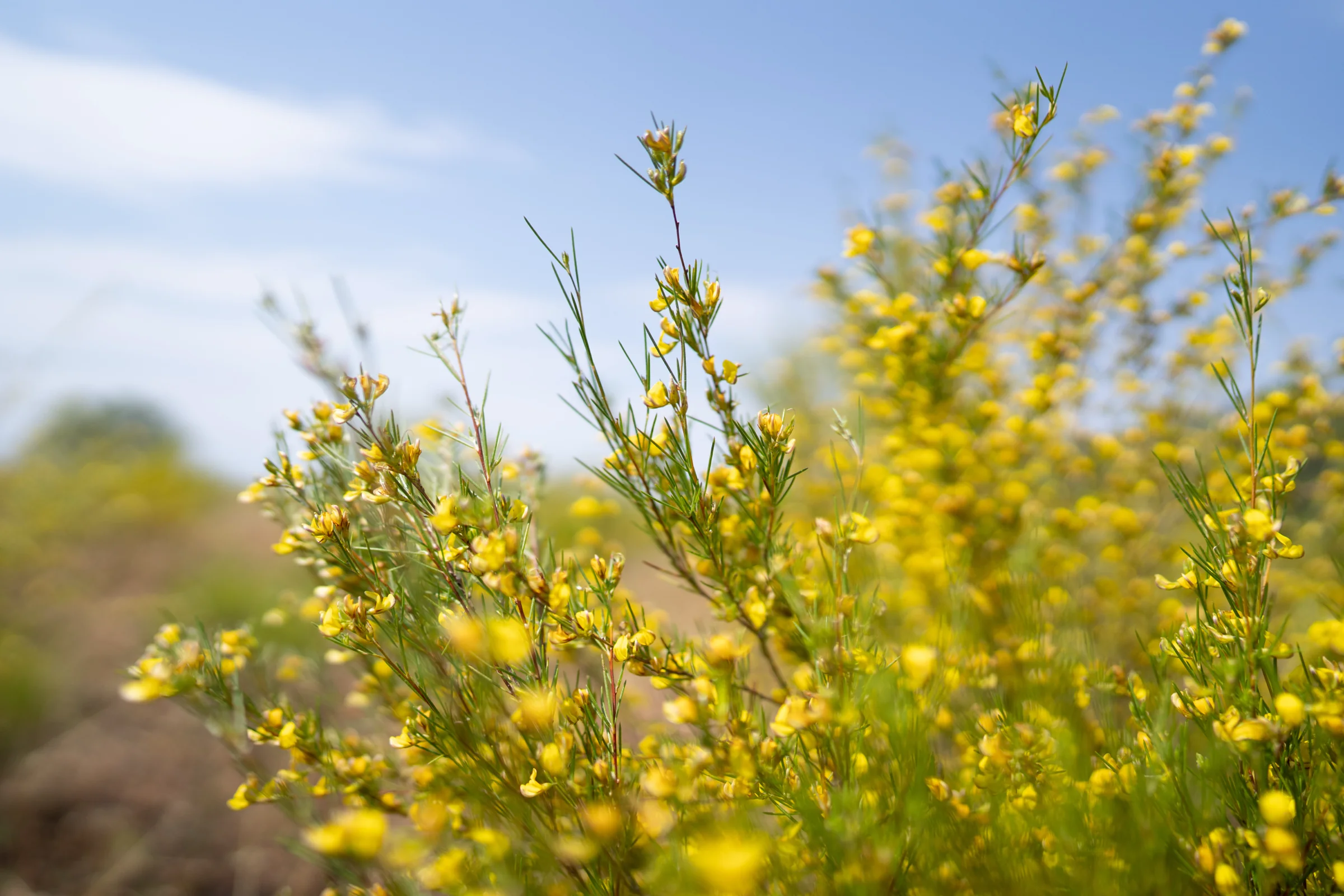
Aspalathus linearis: a shrub with fine green leaves, small yellow flowers and a life that follows the winter rain and summer sun.
Late summer
The hard seed coat is treated to help germination. In the nursery route, seed is usually sown in February or March.
Winter rain
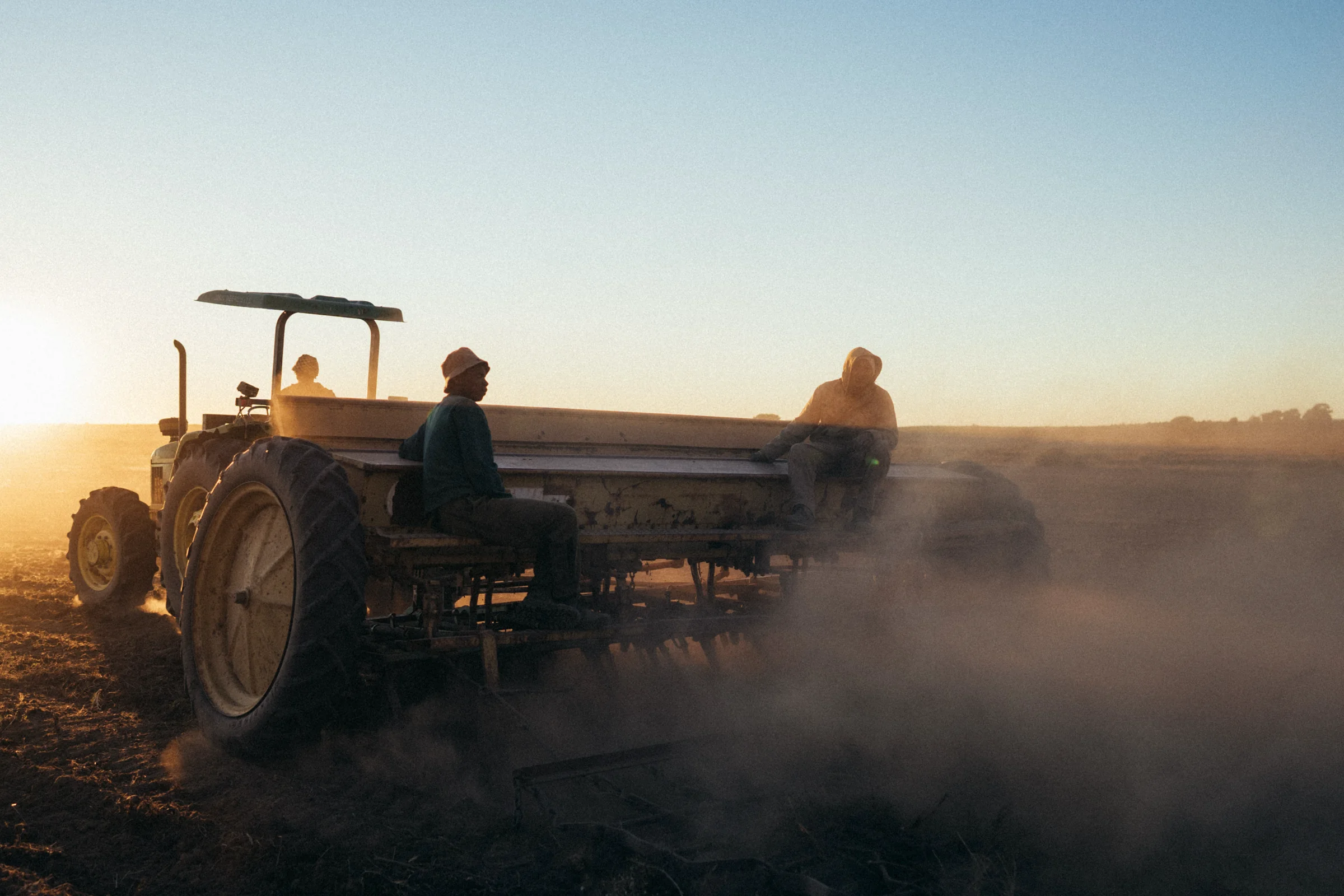
Young plants are moved to the lands in the cooler, wetter months. Rooibos favours acidic, sandy ground; a planting’s progress depends on the season.
Spring to early summer
Small yellow flowers open among the needle-like leaves. They form seed pods, beginning the next generation of plants.
About 12–18 months
The first productive cut follows establishment. The planting route, growing conditions and the stand’s development affect when it is ready.
Successive harvests
New shoots grow after cutting. Cultivated stands are commonly re-established after three to five harvests; this is a farming cycle, rather than the plant’s biological lifespan.
Between plantings
At Cloudskraal, cover crops such as oats and lupins grow between rooibos rotations, resting the land before the next planting.
A guide to cultivated rooibos, with timing that varies by season and planting method. Wild rooibos includes different growth forms and should not be assigned the same commercial cycle.
Supplied by Cloudskraal Farms. Choose a starting point, then agree the specification and available lot with Alex. The names identify our offered grades, not a universal sieve standard.
For buyers seeking a fine-cut rooibos. The sieve distribution, leaf and stem content, moisture and infusion requirements are agreed against a sample.
Discuss your espresso-style extraction equipment, particle size and filtration requirements. This is a finely cut tea grade, not a soluble extract.
For loose-tea and blending enquiries. The cut, blend composition and sensory profile are confirmed for your product.
Stem material for an agreed application, including winemaking trials and research enquiries. Composition, treatment history and suitability are agreed case by case for the intended use; no therapeutic claim is made.
Bag construction and grade compatibility are confirmed per order; not every grade is assumed to be available in every bag.
Samples, specifications, testing, payment and delivery are covered at the sourcing desk. Send your requirements and we’ll take it from there.