Fauna & flora
Meet the flowers, birds and wildlife of the Bokkeveld and surrounding country. Start with a photograph, then look closer.
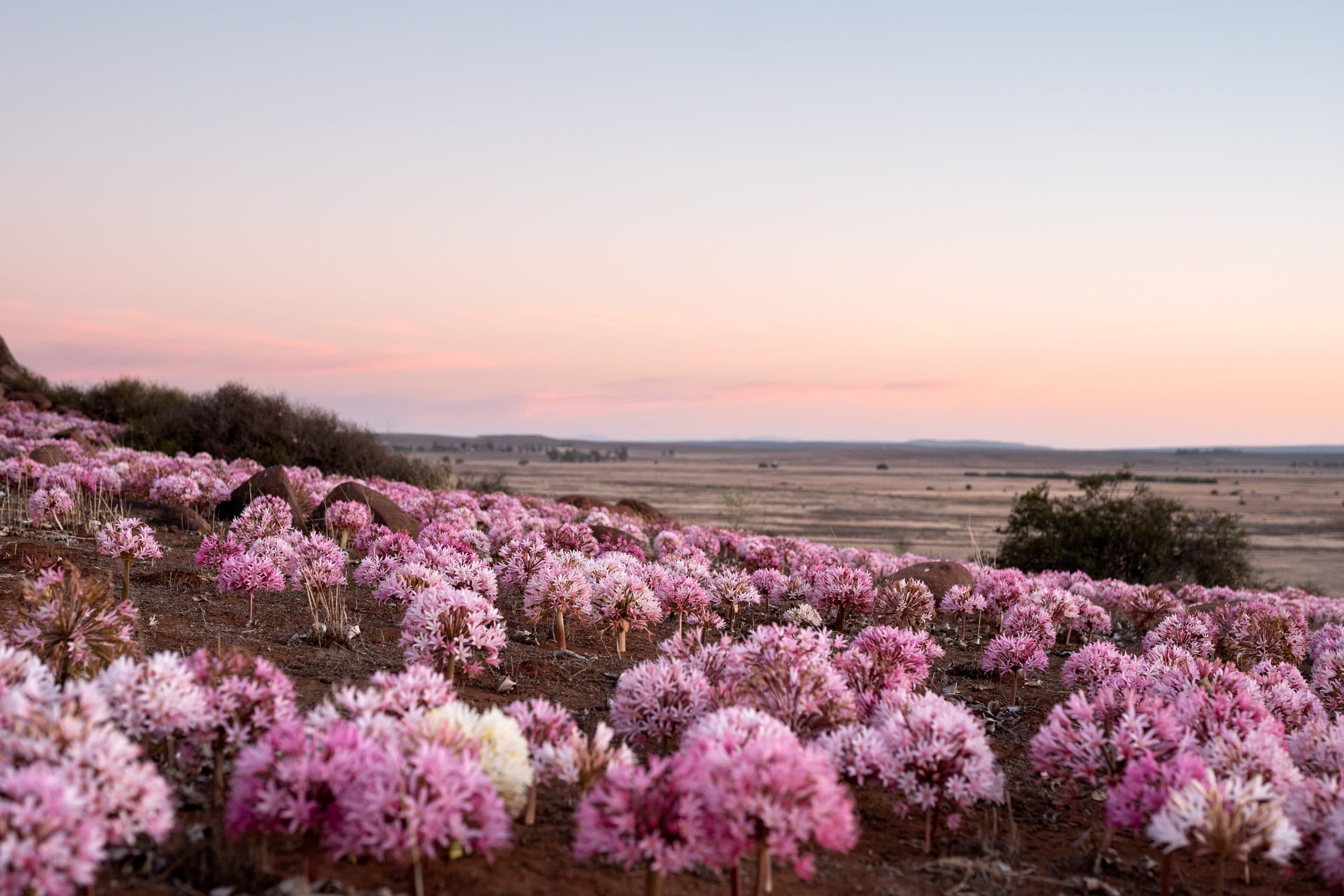
Regional species are not all confirmed on Cloudskraal. Each entry distinguishes farm photographs from regional references; flowering and activity windows depend on conditions.
More filters
Flowering and wildlife activity windows are regional guides and depend on conditions. Unknown seasons do not mean absence, and a regional entry does not establish farm presence.
258 entries

Reference photo · SAplants · CC BY-SA 4.0
Blue pride of Nieuwoudtville
Geissorhiza splendidissima
Bloom window: Late August–September
Regional record
Notes & sources
Family: Iridaceae · Genus: Geissorhiza
Blou trots
Stony clay renosterveld · Nieuwoudtville
A blue-flowered cormous plant of the Bokkeveld. The regional record is separate from the common-name flower captions in our archive.
Late August–September; rain and temperature affect flowering.
Typical regional flowering window. Month-level or seasonal approximation; rainfall, temperature and locality can change bloom timing. No exact day boundaries inferred.
External identification references; not farm photographs or occurrence records.
- File:Geissorhiza splendidissima 1DS-II 2-2593.jpg
SAplants · CC BY-SA 4.0
provider-labelled exact species; not independently identified
- File:Geissorhiza splendidissima 1DS-II 2-2594.jpg
SAplants · CC BY-SA 4.0
provider-labelled exact species; not independently identified
- File:Geissorhiza splendidissima 1DS-II 2-2593.jpg

Reference photo · Chris Vynbos · CC BY-SA 4.0
Scented arum
Zantedeschia odorata
Bloom window: Late July–August
Regional record
Notes & sources
Family: Araceae · Genus: Zantedeschia
Soetvarkblom
Wet dolerite boulder crevices · Nieuwoudtville
Associated with wet crevices in the local dolerite landscape. Its very particular habitat should not be confused with any damp patch on the farm.
Late winter, around July–August in the cited account.
Typical regional flowering window. Month-level or seasonal approximation; rainfall, temperature and locality can change bloom timing. No exact day boundaries inferred.
- SANBI · Zantedeschia odorata
- SANBI · Hantam geology
- PZA-ARUM
- GBIF accepted genus record: Zantedeschia — family Araceae
External identification references; not farm photographs or occurrence records.
- File:Zantedeschia odorata 26062411.jpg
Chris Vynbos · CC BY-SA 4.0
provider-labelled exact species; not independently identified
- File:Zantedeschia odorata 26062481.jpg
Chris Vynbos · CC BY-SA 4.0
provider-labelled exact species; not independently identified

Reference photo · Chris Vynbos · CC BY-SA 4.0
Rooikatstert
Bulbinella latifolia subsp. doleritica
Bloom window: Winter–spring display
Regional record
Notes & sources
Family: Asphodelaceae · Genus: Bulbinella
Heavy red dolerite clay · Bokkeveld
Yellow flower spikes are characteristic of the region's dolerite veld. Older accounts use the rank var. doleritica.
Winter–spring.
Typical regional flowering window. Month-level or seasonal approximation; rainfall, temperature and locality can change bloom timing. No exact day boundaries inferred.
- SANBI · Bulbinella latifolia subsp. doleritica
- BULB-RL
- GBIF accepted genus record: Bulbinella — family Asphodelaceae
External identification references; not farm photographs or occurrence records.
- File:Bulbinella latifolia doleritica 15515356.jpg
Chris Vynbos · CC BY-SA 4.0
provider label Bulbinella latifolia doleritica; matches subspecies epithet; rank wording normalized from existing inventory
- File:Bulbinella latifolia doleritica 15515358.jpg
Chris Vynbos · CC BY-SA 4.0
provider label Bulbinella latifolia doleritica; matches subspecies epithet; rank wording normalized from existing inventory
Reference photo · (c) Karen Eichholz, some rights reserved (CC BY) · CC BY 4.0
Harlequin evening flower
Hesperantha vaginata
Bloom window: August–September
Regional record
Notes & sources
Family: Iridaceae · Genus: Hesperantha
Perdeblom
Dolerite clay · Bokkeveld to Calvinia
A flower connected to specialised monkey-beetle pollination in the regional literature.
August–September.
Typical regional flowering window. Month-level or seasonal approximation; rainfall, temperature and locality can change bloom timing. No exact day boundaries inferred.
External identification references; not farm photographs or occurrence records.
- Hesperantha vaginata — iNaturalist photo 153667567
(c) Karen Eichholz, some rights reserved (CC BY) · CC BY 4.0
provider-labelled exact taxon; not independently identified
- Hesperantha vaginata — iNaturalist photo 153667567

Reference photo · SAplants · CC BY-SA 4.0
Karoo satin flower
Romulea monadelpha
Bloom window: Late July–October
Regional record
Notes & sources
Family: Iridaceae · Genus: Romulea
Karoosatynblom
Dolerite renosterveld · Nieuwoudtville
One of the geophytes described in SANBI's dolerite-veld guide.
Late July–October in the regional account.
Typical regional flowering window. Month-level or seasonal approximation; rainfall, temperature and locality can change bloom timing. No exact day boundaries inferred.
External identification references; not farm photographs or occurrence records.
- File:Romulea monadelpha 1DS-II 2-2507.jpg
SAplants · CC BY-SA 4.0
provider-labelled exact species; not independently identified
- File:Romulea monadelpha 1DS-II 2-2508.jpg
SAplants · CC BY-SA 4.0
provider-labelled exact species; not independently identified
- File:Romulea monadelpha 1DS-II 2-2507.jpg

Reference photo · SAplants · CC BY-SA 4.0
Candelabra lily
Brunsvigia bosmaniae
Bloom window: Summer–autumn; local autumn display
Regional record
Notes & sources
Family: Amaryllidaceae · Genus: Brunsvigia
Maartblom
Open flats and rocky ground · Bokkeveld
A regional candidate for learning about autumn-flowering bulbs. Our photographs are owner-captioned Maartblomme; that name alone is not a checked species identification.
Late summer–autumn; local displays depend on conditions.
Typical regional flowering window. Month-level or seasonal approximation; rainfall, temperature and locality can change bloom timing. No exact day boundaries inferred.
External identification references; not farm photographs or occurrence records.
- File:Brunsvigia bosmaniae 20D 4981.jpg
SAplants · CC BY-SA 4.0
provider-labelled exact species; not independently identified
- File:Brunsvigia bosmaniae 20D 4982.jpg
SAplants · CC BY-SA 4.0
provider-labelled exact species; not independently identified
- File:Brunsvigia bosmaniae 20D 4981.jpg

Reference photo · (c) Brian du Preez, some rights reserved (CC BY-SA) · CC BY-SA 4.0
Nieuwoudtville resin bush
Euryops virgatus
Bloom window: June–August
Regional record
Notes & sources
Family: Asteraceae · Genus: Euryops
Harpuisbos
Localised Hantam habitat
A locally restricted shrub in the SANBI account. Included as regional context without a collecting location or farm occurrence claim.
June–August.
Typical regional flowering window. Month-level or seasonal approximation; rainfall, temperature and locality can change bloom timing. No exact day boundaries inferred.
External identification references; not farm photographs or occurrence records.
- Euryops virgatus — iNaturalist photo 96736873
(c) Brian du Preez, some rights reserved (CC BY-SA) · CC BY-SA 4.0
provider-labelled exact taxon; not independently identified
- Euryops virgatus — iNaturalist photo 96736873
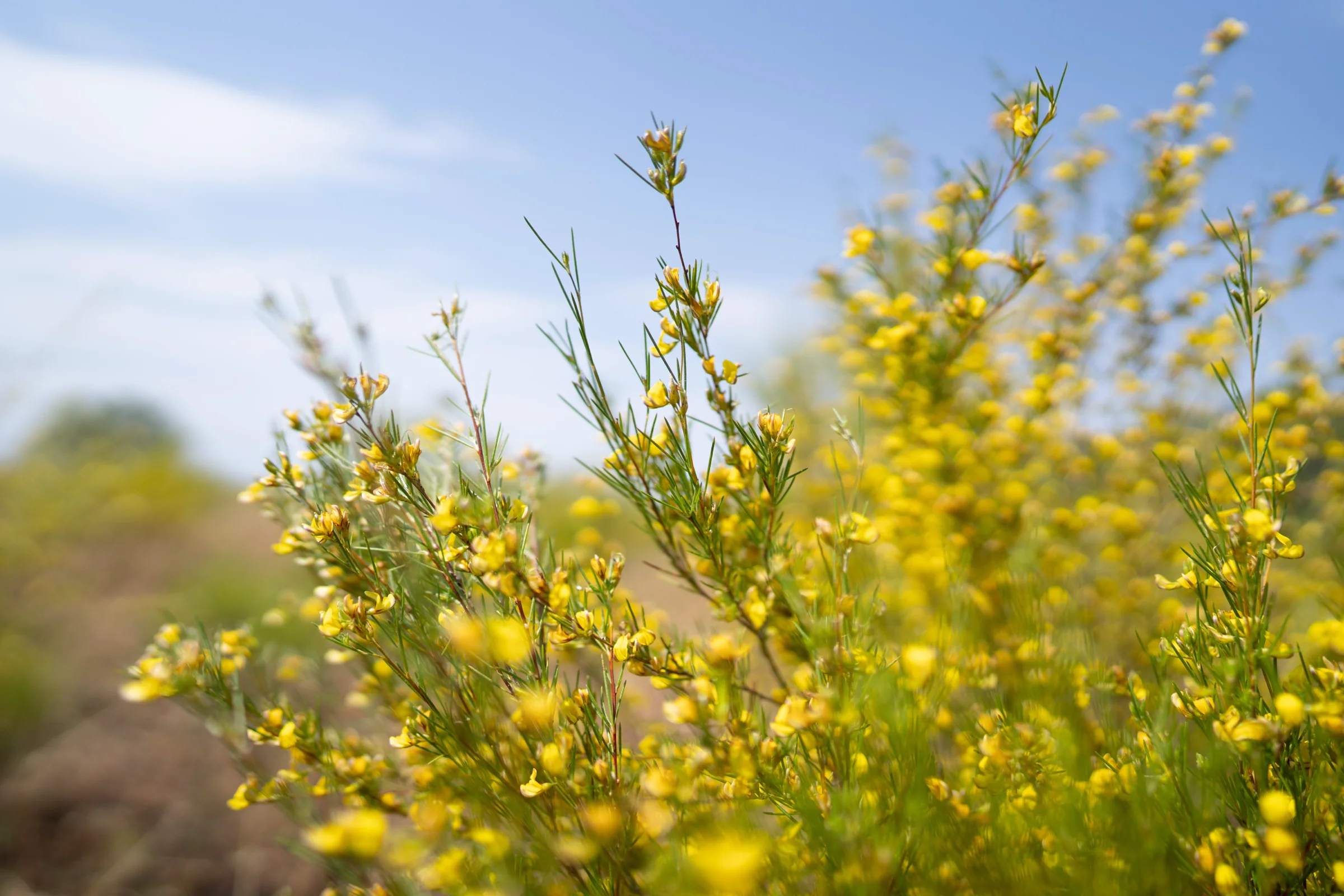
Farm photograph
Rooibos
Aspalathus linearis
Bloom window: Spring–early summer
Owner-identified photograph
Notes & sources
Family: Fabaceae · Genus: Aspalathus
Rooibostee
Cultivated lands · Cloudskraal
Our cultivated crop is documented in the family's photographs. Flowering was photographed on 21 October 2021; this does not establish a wild rooibos population on the property.
Typical regional flowering window. Month-level or seasonal approximation; rainfall, temperature and locality can change bloom timing. No exact day boundaries inferred.
See the family photograph collection
- SANBI · Aspalathus linearis
- Alex Nel · dated family photograph collection
- ROOIWILD
- GBIF accepted genus record: Aspalathus — family Fabaceae
External identification references; not farm photographs or occurrence records.
- File:Aspalathus linearis 171407970.jpg
Dave Richardson · CC BY 4.0
provider-labelled exact species; not independently identified
Reference photo · (c) Tony Rebelo, some rights reserved (CC BY-SA) · CC BY-SA 4.0
Quiver tree
Aloidendron dichotomum
Bloom window: June–July
Wider-range reference
Notes & sources
Family: Asphodelaceae · Genus: Aloidendron
Kokerboom
Rocky arid country · wider region
A wider-region species, rather than a claim about plateau farmland or a tree identified on Cloudskraal.
June–July flowering in the species account.
Typical regional flowering window. Month-level or seasonal approximation; rainfall, temperature and locality can change bloom timing. No exact day boundaries inferred.
External identification references; not farm photographs or occurrence records.
- Aloidendron dichotomum — iNaturalist photo 12403769
(c) Tony Rebelo, some rights reserved (CC BY-SA) · CC BY-SA 4.0
provider-labelled exact taxon; not independently identified
- Aloidendron dichotomum — iNaturalist photo 12403769
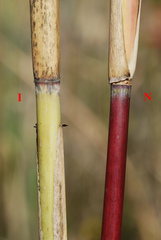
Reference photo · (c) Douglas Goldman, some rights reserved (CC BY-SA) · CC BY-SA 4.0
Common reed
Phragmites australis
Bloom window: December–June
Identification guide · not recorded on farm
Notes & sources
Family: Poaceae · Genus: Phragmites
Fluitjiesriet
Wet ground, river margins and reedbeds
A tall reed grass with feathery flower heads. Compare it with bulrushes and sedges; the reed species in the farm's wet places still needs to be identified.
Typical regional flowering window. Month-level or seasonal approximation; rainfall, temperature and locality can change bloom timing. No exact day boundaries inferred.
- SANBI · Phragmites australis
- Water Research Commission · WET-Health
- GBIF accepted genus record: Phragmites — family Poaceae
External identification references; not farm photographs or occurrence records.
- Phragmites australis — iNaturalist photo 51626641
(c) Douglas Goldman, some rights reserved (CC BY-SA) · CC BY-SA 4.0
provider-labelled exact taxon; not independently identified
Photograph to follow
No verified photograph available yet
Bulrush
Typha capensis
Bloom window: December–January
Identification guide · not recorded on farm
Notes & sources
Family: Typhaceae · Genus: Typha
Papkuil · Matjiesriet
Freshwater margins and muddy wet ground
The dense brown cylindrical flower head differs from a reed's feathery plume. This is a comparison species, not a recorded farm identification.
Typical regional flowering window. Month-level or seasonal approximation; rainfall, temperature and locality can change bloom timing. No exact day boundaries inferred.

Reference photo · (c) linkie, some rights reserved (CC BY) · CC BY 4.0
Ludwig's bustard
Neotis ludwigii
June–October · regional seasonal use
Regional record
Notes & sources
Family: Otididae · Genus: Neotis
Ludwigse pou
Hantam regional bird list
A regional bird to recognise in open country, rather than a farm checklist record.
Ludwig’s Bustard is a large ground bird of open plains and low shrubland. It eats a mixture of small animals and plant material, and males display from open vantage points during courtship. Its brown head and fore-neck, orange hind-neck and white nape help distinguish it from Denham’s Bustard. Birds can travel widely between feeding areas; movements and the need for open habitat make a single regional record a poor predictor of where one will appear next.
Field clue: On open plains, look for the brown head and fore-neck, orange hind-neck and white nape; Denham’s Bustard has a contrasting black crown and white eyebrow.
Some birds use winter-rainfall Succulent Karoo and western Nama Karoo during these months. Partial migration and nomadism mean this is neither an exclusive window nor a farm prediction.
- SANBI · Hantam wildlife and biodiversity
- CapeNature: Knersvlakte Nature Reserve PAMP 2020–2030, taxa pp. 27–33
- iNaturalist: research-grade regional observation 33416731 (community identification)
- BirdLife South Africa: 2025 Red Data Book, Ludwig’s Bustard
- GBIF Backbone Taxonomy — Neotis ludwigii
External identification references; not farm photographs or occurrence records.
- Species photograph reference
(c) linkie, some rights reserved (CC BY) · CC BY 4.0
community_research_grade_not_independently_verified
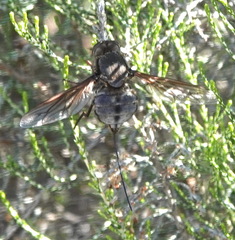
Reference photo · (c) desertnaturalist, some rights reserved (CC BY) · CC BY 4.0
Long-proboscid fly
Prosoeca marinusi
August–November · recorded adult flight
Regional record
Notes & sources
Family: Nemestrinidae · Genus: Prosoeca
Flower-pollinator habitats · Nieuwoudtville–Hantamsberg
A 2021 study examined this fly feeding from Babiana vanzijliae. The 2025 revision extends the known range towards Hantamsberg; the identity should not be assigned to every flower-visiting fly.
This long-proboscid fly is a specialised member of the Nieuwoudtville flower fauna. Its exceptionally long feeding tube reaches nectar in long-tubed flowers, and documented visits include Lapeirousia, Babiana and Nemesia species. The 2025 taxonomic revision recognises a narrow range around Nieuwoudtville extending toward the Hantamsberg near Calvinia. Its grey to dark body and smoky wings help describe it, but distinguishing related flies requires more than simply seeing a very long proboscis.
Field clue: A long proboscis, grey to dark body and smoky wings are useful clues; photograph the whole fly and flower because other Prosoeca can look similar.
The revision reports adults from early August to early November, slightly later on Hantamsberg. Rounded to calendar months; not every day or an annual guarantee. Other life stages are not covered.
- Karolyi and colleagues · Nectar uptake in Prosoeca
- Theron, Ellis and Midgley · Prosoeca revision, 2025
- Barraclough (2018): Prosoeca marinusi, described from Hantam NBG
- iNaturalist: research-grade regional observation 11007431 (community identification)
- Theron, Ellis & Midgley (2025): ZooKeys 1257, Prosoeca marinusi treatment
- GBIF Backbone Taxonomy — Prosoeca marinusi
- Theron, Ellis & Midgley (2025), ZooKeys 1257: Prosoeca marinusi Biology, p. 264
External identification references; not farm photographs or occurrence records.
- Species photograph reference
(c) desertnaturalist, some rights reserved (CC BY) · CC BY 4.0
community_research_grade_not_independently_verified
Photograph to follow
No verified photograph available yet
Bokkeveld pillwort
Pilularia bokkeveldensis
Non-flowering plant
Regional record
Notes & sources
Family: Marsileaceae · Genus: Pilularia
Seasonal-pan edges · Bokkeveld sandstone fynbos
An unusual wetland fern. SANBI's 2013 assessment refers to a 2001 collection; this is a historical regional record and present occurrence needs checking.
Wet-season habitat; a fern has no flowering season.
A fern does not have a flowering season.
Photograph to follow
No verified photograph available yet
Burchell's water-clover
Marsilea burchellii
Non-flowering plant
Regional record
Notes & sources
Family: Marsileaceae · Genus: Marsilea
Seasonal pans · Nieuwoudtville and Hantamsberg vouchers
A water fern represented by historical herbarium specimens. The records are useful context for seasonal pools, not a current farm identification.
A fern does not have a flowering season.

Reference photo · SAplants · CC BY-SA 4.0
Water star
Pauridia aquatica
Bloom window: May–November
Identification guide · not recorded on farm
Notes & sources
Family: Hypoxidaceae · Genus: Pauridia
Seasonal pools and vlei edges · broad Cape range
A winter-growing geophyte, called Spiloxene aquatica in older sources. Included as a wetland comparison; a Cloudskraal occurrence is unverified.
May–November across the species account's wider range.
Typical regional flowering window. Month-level or seasonal approximation; rainfall, temperature and locality can change bloom timing. No exact day boundaries inferred.
External identification references; not farm photographs or occurrence records.
- File:Pauridia aquatica 1DS-II 2-2670.jpg
SAplants · CC BY-SA 4.0
provider-labelled exact species; not independently identified
- File:Pauridia aquatica 1DS-II 2-2670.jpg

Reference photo · (c) Brian du Preez, some rights reserved (CC BY-SA) · CC BY-SA 4.0
Button plant
Conophytum calculus subsp. calculus
Bloom window: Autumn
Regional record
Notes & sources
Family: Aizoaceae · Genus: Conophytum
Knopies
Quartz patches · lower Knersvlakte
A dwarf succulent of the lower plain's quartz habitats. The unidentified plants in our quartz photograph are not assigned this name.
Autumn, with night-opening flowers in the species account.
Typical regional flowering window. Month-level or seasonal approximation; rainfall, temperature and locality can change bloom timing. No exact day boundaries inferred.
- SANBI · Conophytum calculus subsp. calculus
- GBIF accepted genus record: Conophytum — family Aizoaceae
External identification references; not farm photographs or occurrence records.
- Conophytum calculus calculus — iNaturalist photo 33479182
(c) Brian du Preez, some rights reserved (CC BY-SA) · CC BY-SA 4.0
provider-labelled exact taxon; not independently identified

Reference photo · Chris Vynbos · CC BY-SA 4.0
Lapeirousia oreogena
Lapeirousia oreogena
Bloom window: August–mid September
Regional record
Notes & sources
Family: Iridaceae · Genus: Lapeirousia
Dolerite clay; also stony tillite · Nieuwoudtville–Calvinia district
Regional guide candidate; occurrence on Cloudskraal has not been confirmed.
Typical regional flowering window. Month-level or seasonal approximation; rainfall, temperature and locality can change bloom timing. No exact day boundaries inferred.
External identification references; not farm photographs or occurrence records.
- File:Lapeirousia oreogena 15514499.jpg
Chris Vynbos · CC BY-SA 4.0
provider-labelled exact species; not independently identified
- File:Lapeirousia oreogena 15514504.jpg
Chris Vynbos · CC BY-SA 4.0
provider-labelled exact species; not independently identified
- File:Lapeirousia oreogena 15514499.jpg

Reference photo · SAplants · CC BY-SA 4.0
Gladiolus scullyi
Gladiolus scullyi
Bloom window: Winter–spring display
Regional record
Notes & sources
Family: Iridaceae · Genus: Gladiolus
Dolerite renosterveld · Nieuwoudtville dolerite veld
Regional guide candidate; occurrence on Cloudskraal has not been confirmed.
Typical regional flowering window. Month-level or seasonal approximation; rainfall, temperature and locality can change bloom timing. No exact day boundaries inferred.
External identification references; not farm photographs or occurrence records.
- File:Gladiolus scullyi 1DS-II 2-2598.jpg
SAplants · CC BY-SA 4.0
provider-labelled exact species; not independently identified
- File:Gladiolus scullyi 1DS-II 2-2598.png
SAplants · CC BY-SA 4.0
provider-labelled exact species; not independently identified
- File:Gladiolus scullyi 1DS-II 2-2598.jpg
Photograph to follow
No verified photograph available yet
Joyce Lewis’s diascia
Diascia lewisiae
Bloom window: August–September, rainfall dependent
Regional record
Notes & sources
Family: Scrophulariaceae · Genus: Diascia
Sandy loam to clay loam; renosterveld margins · Grasberg and Hantam
Regional guide candidate; occurrence on Cloudskraal has not been confirmed.
Typical regional flowering window. Month-level or seasonal approximation; rainfall, temperature and locality can change bloom timing. No exact day boundaries inferred.

Reference photo · SAplants · CC BY-SA 4.0
Arctotis acaulis
Arctotis acaulis
Bloom window: Spring–early summer
Regional record
Notes & sources
Family: Asteraceae · Genus: Arctotis
Flats and lower slopes; varied soils · Nieuwoudtville–Calvinia and wider Cape
Regional guide candidate; occurrence on Cloudskraal has not been confirmed.
Typical regional flowering window. Month-level or seasonal approximation; rainfall, temperature and locality can change bloom timing. No exact day boundaries inferred.
External identification references; not farm photographs or occurrence records.
- File:Arctotis acaulis 5Dsr 0899-01.jpg
SAplants · CC BY-SA 4.0
provider-labelled exact species; not independently identified
- File:Arctotis acaulis 5Dsr 0899-02.jpg
SAplants · CC BY-SA 4.0
provider-labelled exact species; not independently identified
- File:Arctotis acaulis 5Dsr 0899-01.jpg

Reference photo · SAplants · CC BY-SA 4.0
Cotula nudicaulis
Cotula nudicaulis
Bloom window: Spring display
Regional record
Notes & sources
Family: Asteraceae · Genus: Cotula
Regional spring-flower display; soil unspecified · Hantam
Regional guide candidate; occurrence on Cloudskraal has not been confirmed.
Typical regional flowering window. Month-level or seasonal approximation; rainfall, temperature and locality can change bloom timing. No exact day boundaries inferred.
External identification references; not farm photographs or occurrence records.
- File:Cotula nudicaulis 1DS-II 2-2492.jpg
SAplants · CC BY-SA 4.0
provider-labelled exact species; not independently identified
- File:Cotula nudicaulis 1DS-II 2-2493.jpg
SAplants · CC BY-SA 4.0
provider-labelled exact species; not independently identified
- File:Cotula nudicaulis 1DS-II 2-2492.jpg

Reference photo · SAplants · CC BY-SA 4.0
Nemesia cheiranthus
Nemesia cheiranthus
Bloom window: Spring display
Regional record
Notes & sources
Family: Scrophulariaceae · Genus: Nemesia
Regional spring-flower display; soil unspecified · Hantam
Regional guide candidate; occurrence on Cloudskraal has not been confirmed.
Typical regional flowering window. Month-level or seasonal approximation; rainfall, temperature and locality can change bloom timing. No exact day boundaries inferred.
External identification references; not farm photographs or occurrence records.
- File:Nemesia cheiranthus 1DS-II 2-2483.jpg
SAplants · CC BY-SA 4.0
provider-labelled exact species; not independently identified
- File:Nemesia cheiranthus 1DS-II 2-2486.jpg
SAplants · CC BY-SA 4.0
provider-labelled exact species; not independently identified
- File:Nemesia cheiranthus 1DS-II 2-2483.jpg
Photograph to follow
No verified photograph available yet
Senecio cakilefolius
Senecio cakilefolius
Bloom window: Spring display
Regional record
Notes & sources
Family: Asteraceae · Genus: Senecio
Regional spring-flower display; soil unspecified · Hantam
Regional guide candidate; occurrence on Cloudskraal has not been confirmed.
Typical regional flowering window. Month-level or seasonal approximation; rainfall, temperature and locality can change bloom timing. No exact day boundaries inferred.


